From Fragmented Processes to a Unified System
University of Rochester School of Medicine and Dentistry
A top-tier academic health science center unifying complex, high-volume admissions across multiple programs at scale.
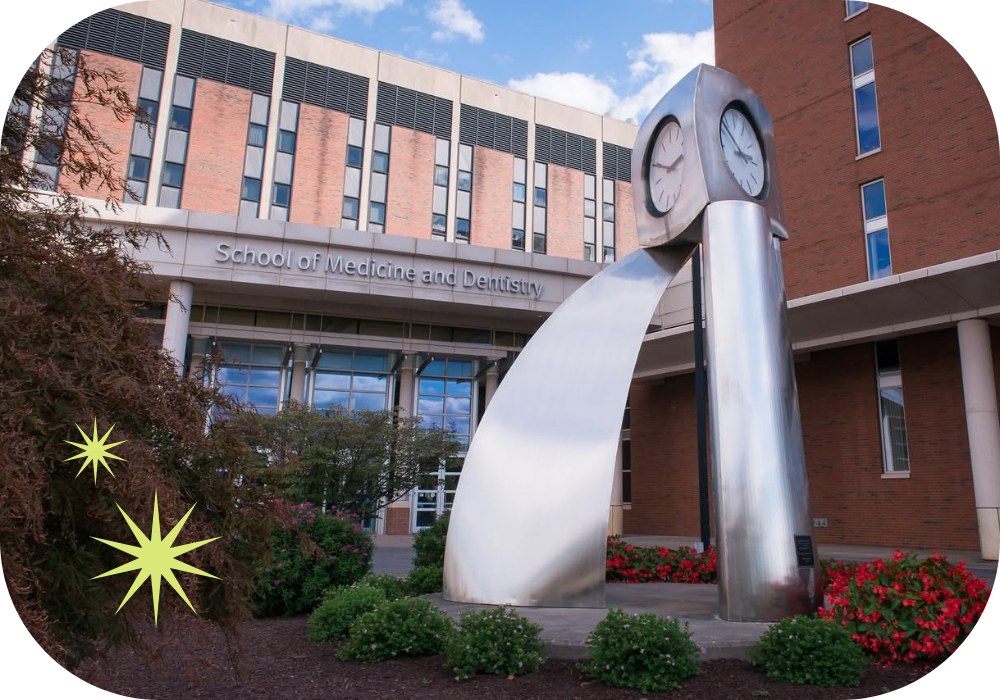
About: Meet the Institution Behind the Challenge
Various Highly-Rated Programs
Rochester trains future physicians, scientists, and healthcare leaders through a range of highly selective programs.
Complex requirements and high volume of applicants
The institution needed a more efficient and unified approach to managing its admissions processes across programs.
The Challenge: Complex Reviews Without a Centralized System
High application volume
Admissions workflows were highly detailed and required coordination across multiple stakeholders. Consistency and tracking proved difficult.
Disconnected tools and platforms
Without a centralized system, teams relied on manual processes and disconnected tools to manage reviews, communicate decisions, and monitor applicant progress.
Inefficient admission processes
The result was a time-intensive process that limited visibility, slowed decision-making, and made it difficult to scale as application volume increased.
The Solution: A Better Platform for Structured Review
-
By implementing AMP, the school introduced a centralized admissions platform designed to support complex, multi-stage review workflows.
-
Applications are now routed through structured evaluation processes, allowing reviewers and committees to assess candidates efficiently while maintaining the rigor required for medical admissions.
-
Admissions teams can track applicant progress in real time, manage communications within a single system, and ensure consistency across every stage of the review process.
-
The platform’s flexibility allows the school to adapt workflows as needed while maintaining a standardized foundation for all programs.
The Impact: Greater Efficiency, Consistency, and Visibility
Impact #1
Admissions teams now operate within a system that reduces administrative burden and improves coordination across reviewers and committees.
Impact #2
Decision-making is faster and more transparent, with clear visibility into where each applicant stands in the process.
Impact #3
Leadership benefits from more consistent data and reporting, enabling better oversight of admissions performance and more informed planning for future cycles.
Impact #4
Ultimately, the school is able to maintain its high standards for applicant review while operating more efficiently at scale.